


A useful visitor does not have to begin with a search for your business. They might follow a supplier’s recommendation, read a local newsletter, attend an event, or click a resource another professional shared.
The opportunity is not simply to get a link. It is to connect a relevant audience with a page that delivers what the link promised. That is a better starting point than pursuing traffic for the sake of a larger number on a report.
Choose the audience before the placement
List the places your potential customers already turn to for information. Consider trade groups, complementary businesses, suppliers, local organizations, relevant publications, and communities with clear rules about participation.
Ask why their audience would care about your contribution. A home-service provider and a local property-management business may have useful topics in common. An online retailer might have an opportunity through a manufacturer’s stockist page or a specialist buying guide.
The example does not need to be large or elaborate. A clear explanation that solves a recurring customer problem can be a useful resource for another organization. Focus on the audience fit and the usefulness of the information before discussing how many visits the site might send.
Offer something that helps that audience
A collaboration could be an article, event contribution, practical checklist, demonstration, or accurate directory entry. Keep it grounded in knowledge you can support. Do not turn every interaction into a sales pitch or promise expertise you do not have.
Respect community and publication rules. If you answer a question in a forum, make the answer helpful without requiring a click. Link to a longer resource only where it genuinely adds value and the community permits it.
Be clear about commercial relationships. Paid promotion can be a useful marketing channel, but it should not be disguised as an independent endorsement or sold as a guaranteed ranking improvement. Google’s guidance explains how paid links should be qualified. [1]
Send people to a page that keeps the promise
If the link offers advice about a particular service, the destination should explain that service or answer that question. Sending every visitor to the homepage adds another task and can leave them wondering whether they followed the right link.
Review the page as someone arriving without prior knowledge of your business. Can they identify the subject immediately? Does it contain the promised information? Is the next step appropriate to their stage of interest? An educational visitor may need more explanation before a quote request.
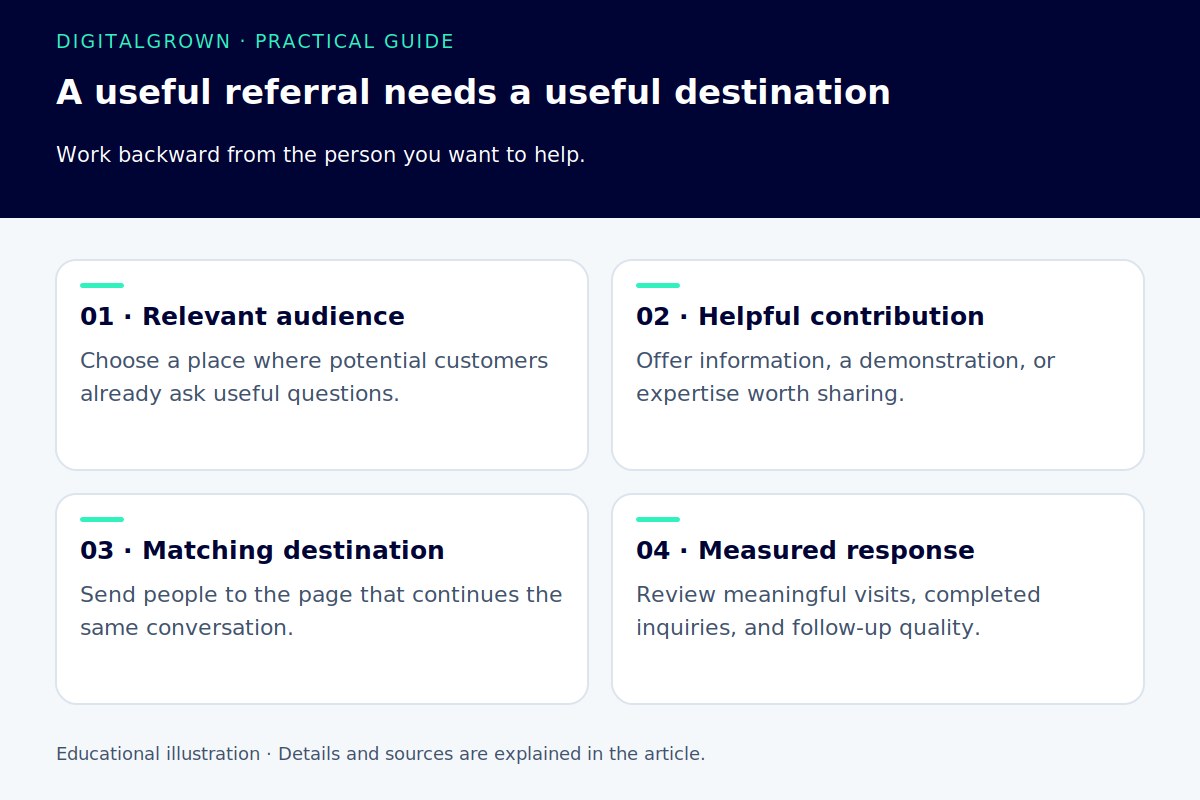
For example, a newsletter discussing preparation for a home project could link to a relevant preparation guide. The guide can then explain when professional help is needed and link to the service page. The sequence should help the person make a decision rather than force them through unnecessary pages.
Use consistent campaign labels when appropriate
When you control a campaign link, UTM parameters can help identify the source, medium, and campaign in Google Analytics. Google’s documentation recommends using utm_source, utm_medium, and utm_campaign together when adding campaign parameters. [2]
Agree on simple labels before sharing the link. For example, a partner newsletter could use a recognizable source name, an email medium, and a campaign name your team will still understand later. Keep the naming consistent so one campaign does not become several almost-identical rows.
Use campaign tagging for appropriate external promotions, not ordinary links between your own pages. Keep personal information out of URL parameters. A label should describe the campaign, not identify the customer.
Separate a referral from an attributed channel
In everyday language, a newsletter or partner recommendation is a referral. In an analytics report, the visit may be assigned to email, referral, paid traffic, or another channel depending on the link and the available data. Check the source and medium rather than assuming all recommendations appear in the report’s Referral row. [3]
Tracking also has limits. Consent choices, missing tags, browsers, redirects, and a customer returning later can affect what the report can connect. A blank or unexpected source should prompt investigation, not an invented explanation.
Measure whether the visits are useful
Review the landing pages, completed inquiries, and the kind of requests your team receives. A small relevant audience can be more useful than a large group that never needed the service. Ask customers how they heard about you when that fits the conversation, and keep that information alongside the analytics.
Choose one manageable collaboration, prepare a useful destination, and agree on how you will judge it. Afterward, review what people asked and whether the page helped them. You can improve the explanation or choose a better audience before expanding the activity.
DigitalGrown’s analytics and research work helps connect the available reports with business questions. If the destination needs attention, website design and content optimization help make the visit worthwhile when it arrives.


